

Solutions
Hire hundreds, and still judge each person by the same criteria
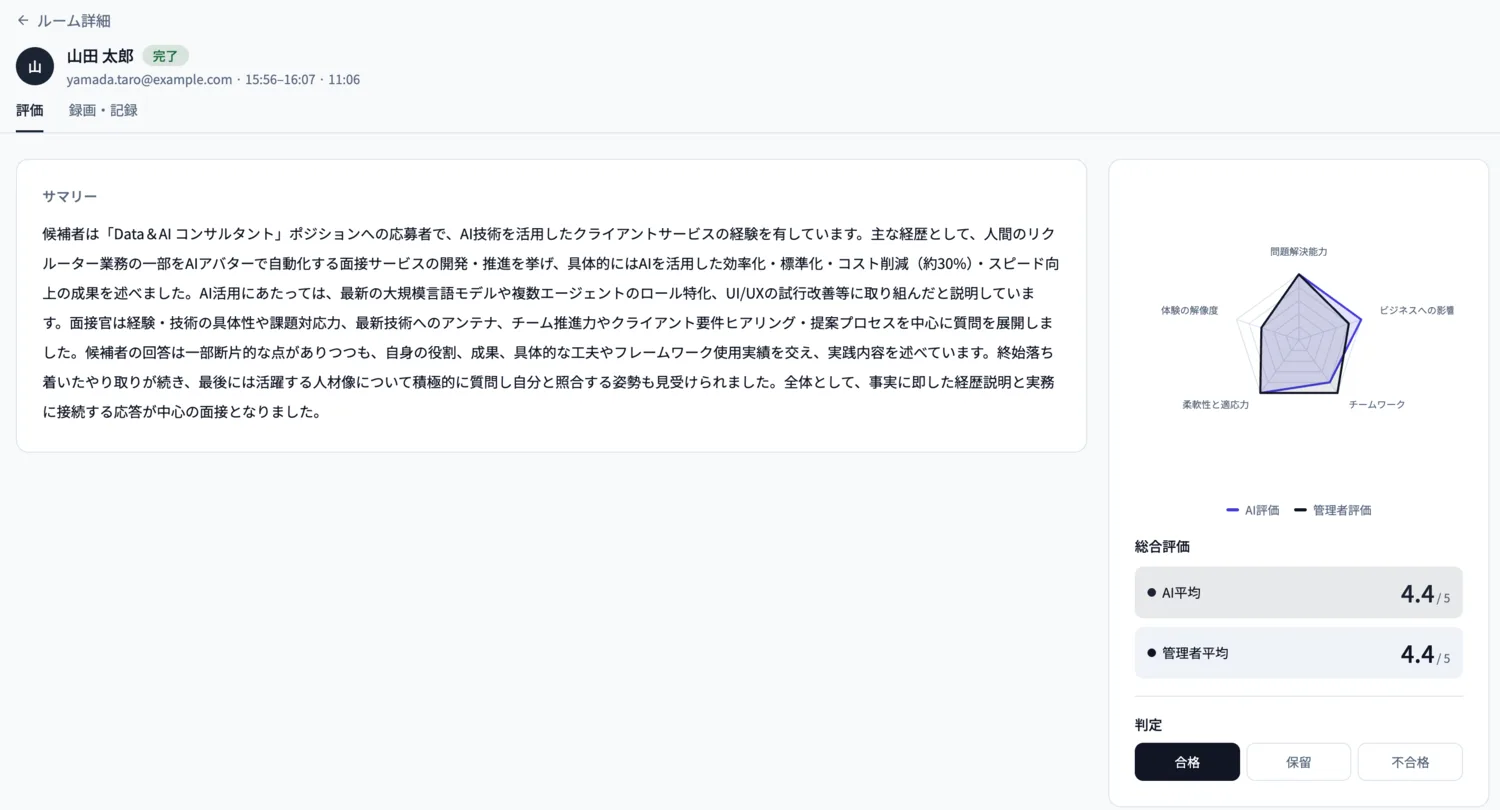
Applications spike in peak season, but interview slots do not. The AI Interviewer runs first-round interviews in parallel, and evaluations are generated against one shared set of criteria.
Challenge
What breaks first in high-volume hiring
The more applications arrive, the less time each one gets. Interview capacity, consistency of evaluation, and screening accuracy degrade in that order.
- Interview slots fill up, and candidates drop out while they wait
- Interviewers drafted in at short notice rate candidates differently
- The bar slips in order to get through the volume
01
Application
02
AI Screener
Analyses the resume and scores it against your criteria
03
AI interview
Send a URL. Parallel, 24/7
04
Evaluation generated
A score and its reasoning for each criterion
05
Final decision
Your hiring team
The three shaded steps are automated. The pass-or-fail decision is made by a person.
Solution
Run more interviews without adding interviewers
The AI Interviewer handles first-round interviews in parallel. Set the questions and evaluation criteria once per role, and every applicant meets the same conditions.
- Runs 24/7 and in parallel
- A score and its reasoning generated for each criterion
- Evaluation is based on what the candidate says
Related pages
More detail, by topic
With high volume, screening and first rounds clog first. These pages cover each stage, and how to read the spread of scores.
Hand first-round interviews to AI and spend the time on final rounds.
More criteria do not mean more evidence →
Why scores bunch up, checked against public civil-service rating data.
Frequently asked questions
At what volume does this start to pay off?
Around 100 interviews is the guide. That is roughly where enough data accumulates for tuning the evaluation criteria to take effect. The Flex plan also has a 100-interview minimum.
Can the criteria differ by role?
Yes. Register a job title and job description for each role, then set the questions and evaluation criteria for it.
Does the candidate need to prepare anything?
A browser is all they need. It works on desktop, smartphone and tablet, with no app to install.
Can we use it only during peak season?
Flex is bought per interview and credits are valid for one year from purchase. You can buy a block for peak season and use it within that period. You are charged on interviews actually taken, so inviting more people does not raise the cost. See pricing details
Tell us about your peak-season hiring plan
Based on your expected application volume and roles, we will show which steps can be automated. Free, about 30 minutes.